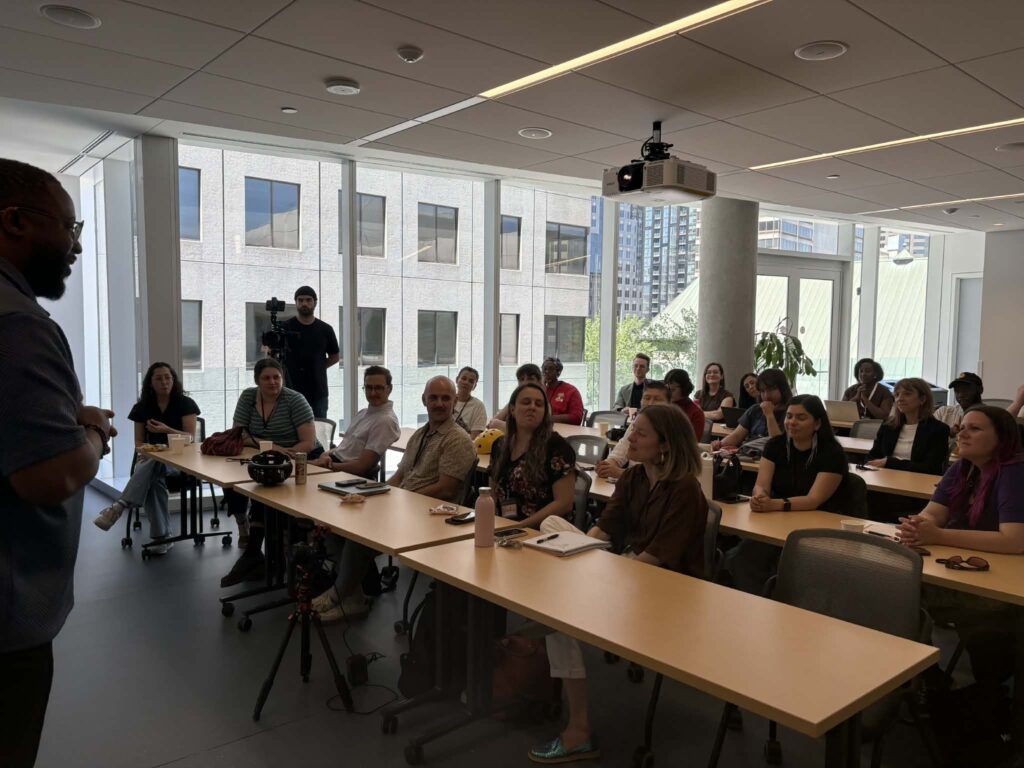
On May 26, approximately twenty participants gathered at HEC Montréal for the RésAUT event focused on Indigenous Identity in an Urban Context: Challenges and Strengths, which was organized by the First Nations of Quebec and Labrador Economic Development Commission (FNQLEDC), in collaboration with the First Nations Executive Education (FNEE) and the City of Montreal.
Conceived as a welcoming and authentic space for exchange, this meeting aimed to open a dialogue around the realities experienced by First Nations entrepreneurs in urban settings. Through personal reflections, group discussions, and the sharing of experiences, the event highlighted both the challenges and the strength of identity that emerge from these journeys.
A welcome that set the tone
The day began with a welcome address from Myriam Ntashamaje, Program Manager at the FNEE, a key partner of the event along with the City of Montreal. This welcoming moment quickly led to a roundtable discussion, which gave each participant an opportunity to introduce themselves and share their expectations.
Essential contextualization
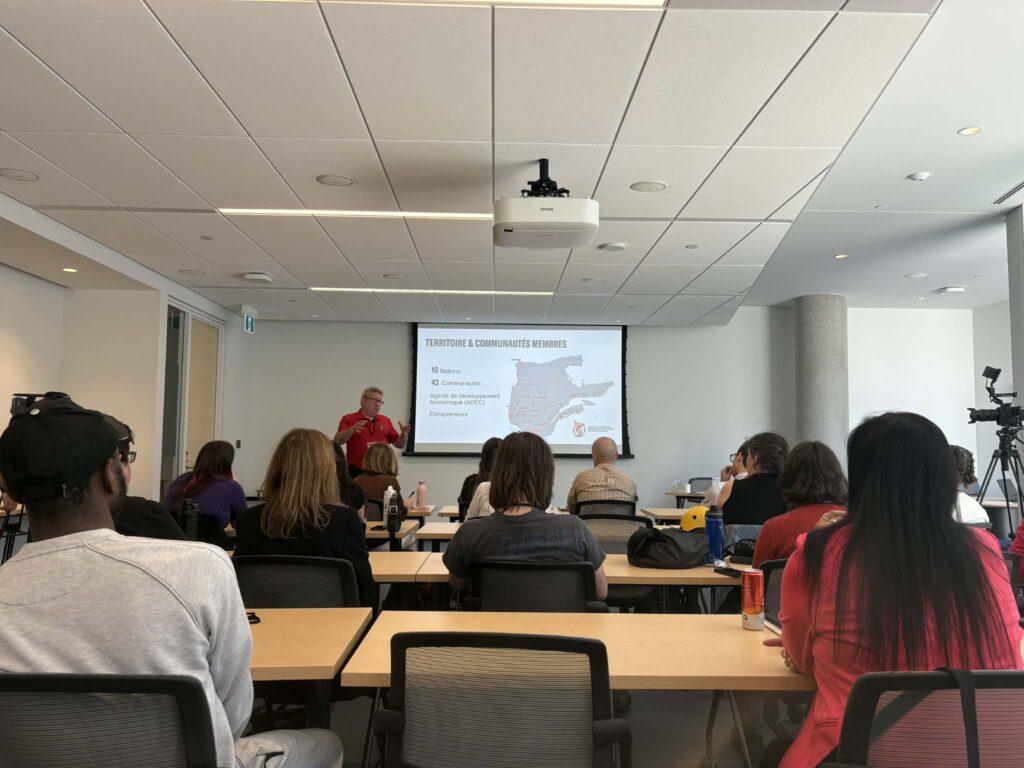
The FNQLEDC then presented its organization and the ID1N (First Nations Identification) initiative, an important tool for the recognition and self-determination of First Nations people. This introduction laid the groundwork for collective reflection: how does urban life transform our relationship with Indigenous identity? And what catalysts can be used to turn this reality into a strength?
An exceptional panel
The highlight of the afternoon was the panel featuring three powerful and complementary voices:
Randy Legault-Rankin, Commissioner for Indigenous Relations for the City of Montreal, shared his vision of municipal policies regarding recognition and inclusion.
Wasena Joyal, Youth Program Coordinator at Native Montreal, provided on-the-ground insights into initiatives led by and for First Nations youth in an urban context.
Carling Sioui, Founder of O’YENHRA, offered a powerful testimony on Indigenous entrepreneurship as a vehicle for asserting identity.
Through their presentations, the panelists addressed various issues related to Indigenous identity in an urban context: sense of belonging, cultural reconnection, representation, intergenerational challenges, and the importance of creating safe and inclusive spaces for Indigenous communities living outside their traditional communities.
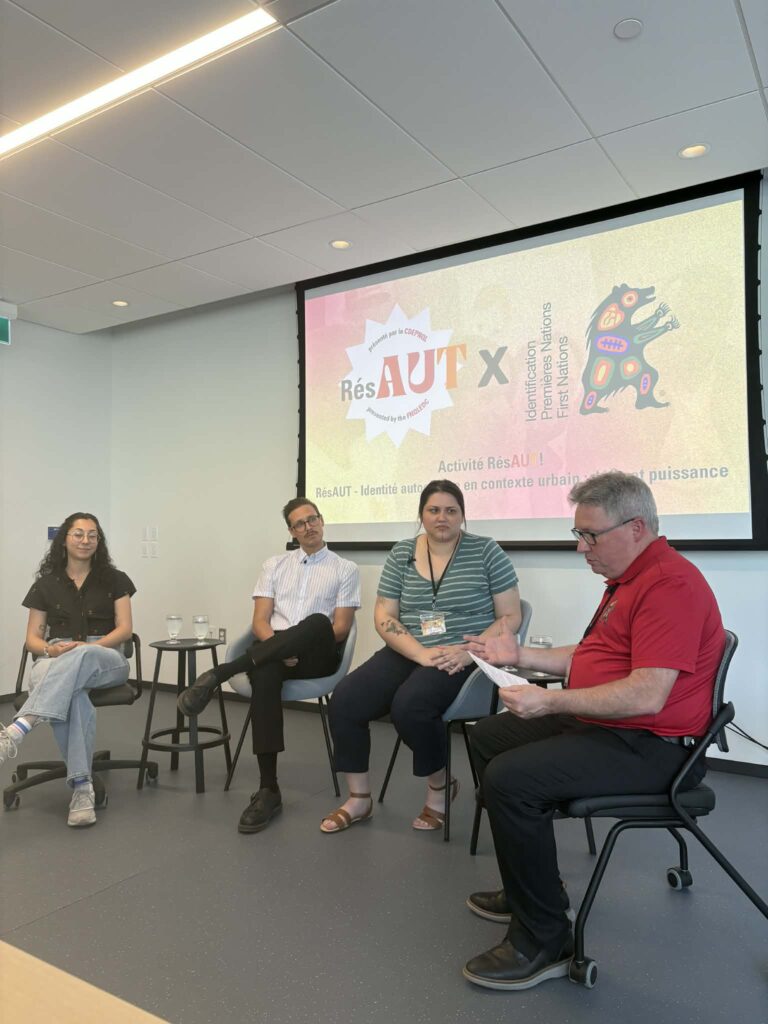
A key finding emerged from the discussions: integration in urban settings largely depends on involvement with Indigenous organizations. Randy Legault-Rankin emphasized that these organizations act as essential bridges between municipal institutions and Indigenous citizens, offering both concrete support and a political voice. Wasena Joyal illustrated how Native Montreal creates spaces where young people can build connections, reconnect with their culture, and develop a sense of belonging in the city. Carling Sioui, through her experience with O’YENHRA, demonstrated that collective entrepreneurship not only allows individuals to reclaim their identity but also to build lasting solidarity networks. All agreed that getting involved, whether in a community organization, a youth initiative, or an economic project, is a concrete way to transform the challenges of urban life into collective strength.
The discussions also highlighted the resilience, creativity, and collective strength that emerge from these urban realities.
The afternoon concluded with a friendly networking session that gave participants the opportunity to continue discussions, forge new connections, and strengthen a network that is committed to reconciliation.
With RésAUT, the FNQLEDC is continuing its mission to foster spaces for encounters, dialogue, and collaboration for entrepreneurs and players in the Indigenous ecosystem of the Greater Montreal area. This event demonstrated, once again, the richness of the exchanges that arise when experiences, voices, and perspectives converge.
To stay up to date on RésAUT activities and other FNQLEDC events, follow us on Facebook and LinkedIn!